


When planning a solar carport, decision-makers often face a crucial question: Should they choose monofacial or bifacial solar panels? The choice impacts not only energy yield but also aesthetics and overall investment costs. Understanding the key differences can help ensure the best solution for your parking area.
The best part? Bifacial panels cost as little as monofacial panels and taking into account that Bifacial panels dont need an underconstruction makes solar carports with bifacial panels even cheaper. Still decision-makers struggle
Bifacial solar panels differ from traditional modules by allowing sunlight to pass through and be absorbed from both the front and rear sides. They take advantage of reflected light from surfaces like pavement or vehicles, significantly increasing total energy production.
Monofacial panels have a foil backsheet that prevents sunlight from passing through the module. This reduces brightness under the carport, which particularly affects the beauty of a solar carport negatively. Especially in larger carport construction like in double-row solar carport setups like the SunCatcher, a combination of an underconstruction and monofacial solar modules can lead to unpleasent and restricted spaces.
A solar carport with bifacial solar modules looks more inviting and friendly. It enhances visibility and creates a more open and modern feel.
Additionally, being able to see solar panels from below reinforces the sustainability message. In contrast, non-transparent panels may make a solar carport appear like a conventional carport.
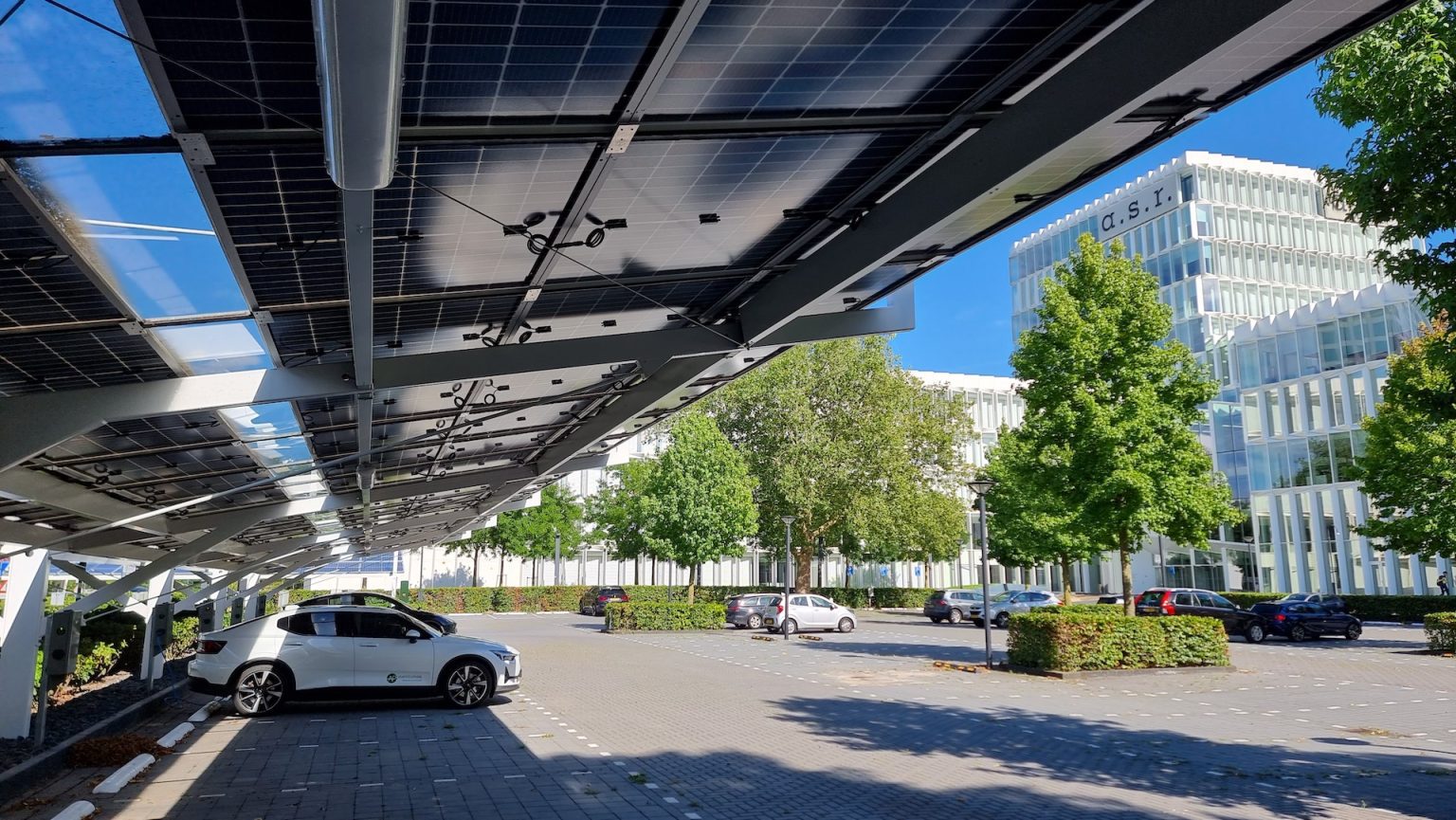
Deciding between monofacial and bifacial solar modules for your solar carport depends on your priorities. However, two key factors to consider are electricity production and aesthetics.
Electricity Production
According to manufacturers, Bifacial solar modules generate up to 30% more power by capturing reflected sunlight. However, real-world gains depend on factors like surface reflectivity and environmental conditions. While exact figures vary, bifacial modules consistently outperform monofacial ones, making them the best choice for maximizing energy output. This extra energy can efficiently power buildings or charge electric vehicles. This extra electricity combined with an Energy Management System (EMS), can help businesses reduce their carbon footprint, and cut costs.
Aesthetic Considerations
While both panel types generate significant electricity, bifacial panels enhance the visual appeal of solar carports. Employees and visitors charging their electric vehicles beneath the carport can see the solar panels supplying their energy, reinforcing your company’s commitment to sustainability. With bifacial panels, your solar carport stands out as an innovative, eco-friendly solution rather than just another parking structure.
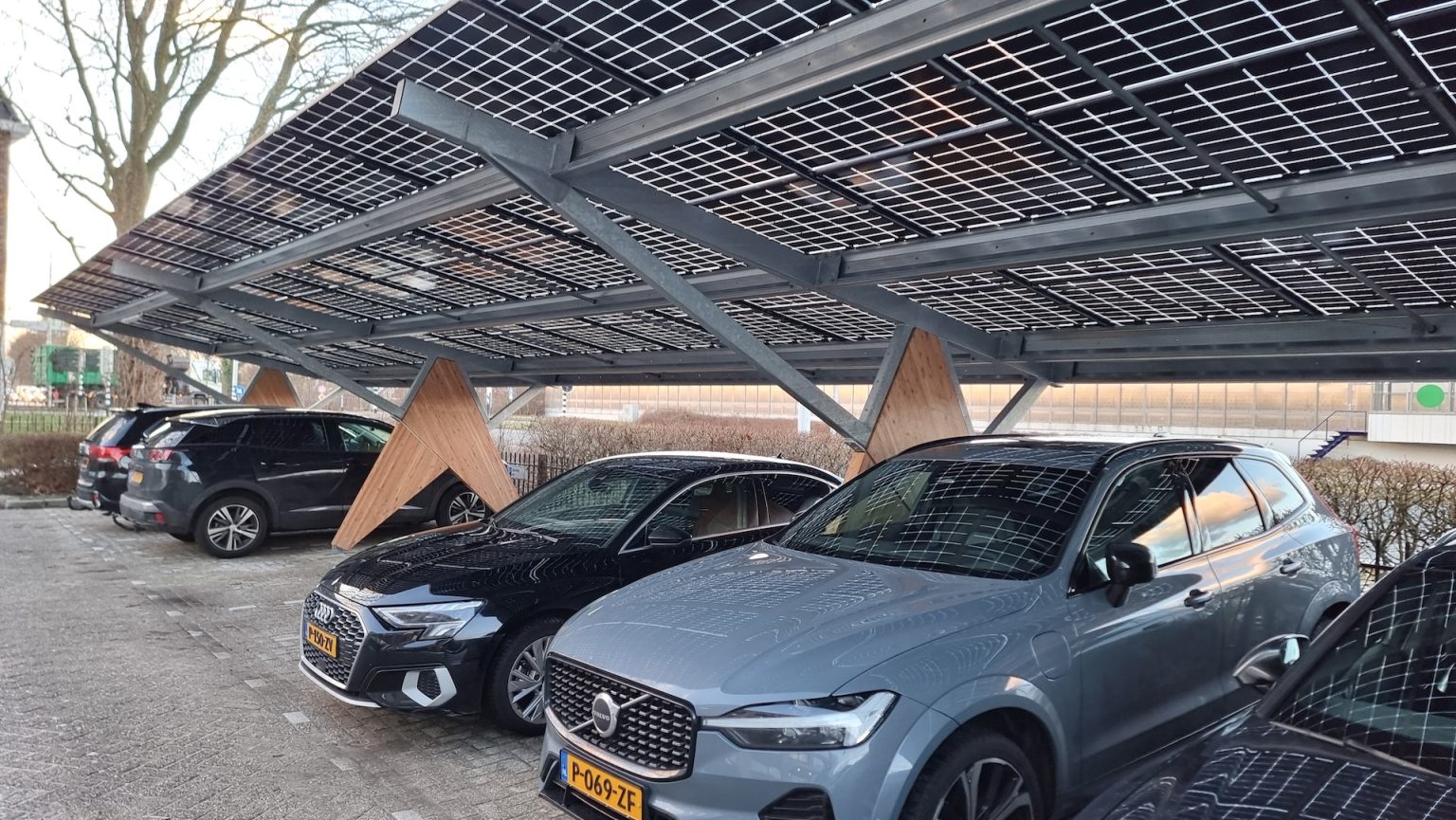
Bifacial panels offer several advantages over their monofacial counterparts. Both have similar investment costs, but bifacial panels are designed for applications requiring greater structural integrity. When used as an integral part of the roof, they eliminate the need for an additional understructure, leading to further cost savings.
Key Benefits of Bifacial Solar Panels for Carports

Did you know that AmperaPark offers turnkey solar carports with bifacial solar panels, requiring no upfront investment?
All of AmperaPark’s models, like the AmperaPort Signature and the AmperaPort SunCatcher, come equipped with bifacial solar panels. Carports are an ideal application for this technology, as parking lots often contain highly reflective surfaces like asphalt, concrete, and parked cars. These conditions enhance rear-side production, making bifacial panels the perfect choice for solar carports.
AmperaPark is the Dutch market leader in solar carports with integrated charging solutions. If you want to learn how solar carports can future-proof your organization and reduce costs from the first month, book a free consultation with one of our experts today!
Contact
Are you also interested in a green upgrade of your parking lot?