


By 2025, the transition to green mobility is not just a distant dream; it is already taking place. Due to national and EU laws that aim to make all new automobiles emission-free by 2030, the number of electric vehicles (EVs) on Dutch roads has continued to rise quickly. To be exact, BEV’s (battery electric vehicles) market share is at 35% in The Netherlands in 2024.
Electric driving is increasingly becoming the standard rather than the exception as companies and municipalities actively shift their fleets. Concurrently, the infrastructure for charging is growing at an unprecedented rate. However, quantity isn’t enough; the secret to future-proofing this expansion is to find clever and sustainable solutions.
Green mobility is more than just switching to electric vehicles from diesel ones. The goal is to establish a circular, interconnected system in which energy and mobility coexist. This comprises:
One of the biggest problems that has surfaced recently is not adoption, but grid congestion. While it is a worldwide issue, The Netherlands is particularly plagued by this problem. Multiple provinces are labeled as “red zones”, where grid expansion is next to impossible. This has severe ramifications for businesses and households alike, such as:
Inability to charge multiple EVs simultaneously.
Delays or limits in expanding charging infrastructure.
Solar PV projects becoming less profitable or even blocked due to feed-in restrictions.
Higher energy costs during peak hours due to grid strain.
Solving grid congestion on a national level is complex and will take time — but smart, local solutions can already make a difference.
For instance, grid congestion is now a national obstacle that impacts where and how we can deploy renewable energy and increase charging capacity, rather than just a technical side issue. More innovation in energy systems is also required, including better instruments for locally storing and using electricity as well as more intelligent methods of managing supply and demand. These answers won’t appear right away. They necessitate constant work from individuals, corporations, and the government.
Furthermore, cross-sector collaboration is still essential. Redesigning cities and workplaces for a more sustainable future requires coordination across mobility, energy, and spatial planning. Beyond technology, people must be kept informed and involved in order to increase knowledge of the intricate processes at work and the actual effort required to change from fossil fuel-based behaviors to genuinely environmentally friendly ones.
The change won’t happen on its own. It requires dedication, creativity, and persistent pressure for change.
While national grid upgrades and broad policy changes take time, businesses and institutions require solutions to their problems now.
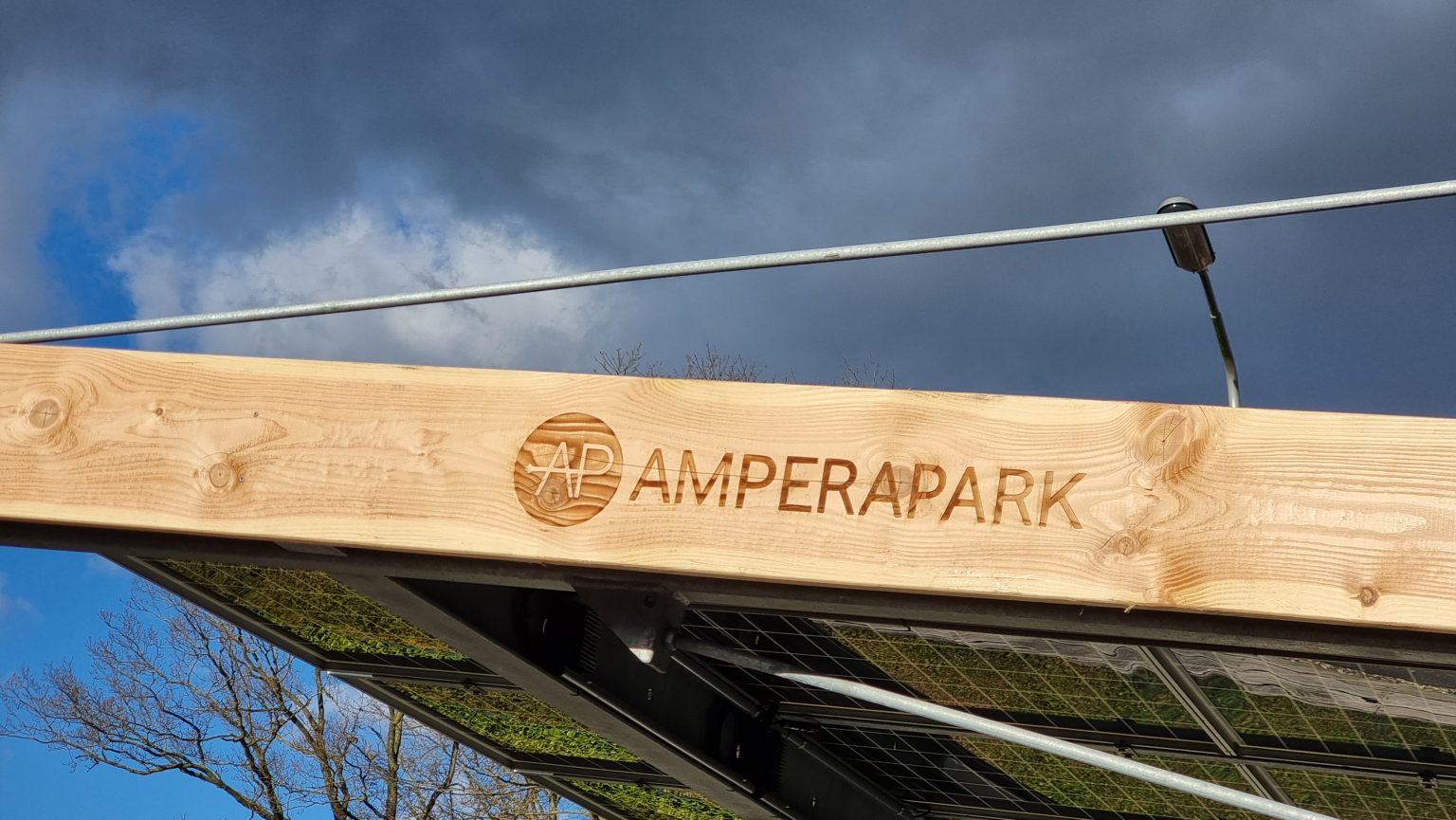
Organizations can lower their dependency of the public energy grid with the help of solar carports with integrated energy management systems. Businesses can thereby advance their sustainability objectives by producing renewable energy locally, controlling EV charging, and balancing loads.
Whether you wish to electrify your fleet, deal with grid congestion, or just make better use of your available space, our solutions are made to assist you make the change with confidence and clarity.
One parking spot at a time, we support a practical, smart, and innovative approach to green mobility.
Are you also interested in a green upgrade of your parking lot?